Edition 1
The Five Star Treatment Room
Designing a treatment space that speaks to all five senses — sight, sound, smell, touch and taste — so the room itself becomes part of the treatment.
The EPC Edit · Edition 3
The science of smarter exfoliation — how enzymes, AHAs, BHAs and PHAs differ, what the percentage doesn’t tell you, and how to choose the right resurfacer for the skin in front of you.
Published
Exfoliation is one of the most powerful tools available to estheticians, but stronger does not automatically mean better.
Enzymes and acids can improve texture, radiance, congestion, uneven tone, and the overall performance of a treatment. The key is understanding how they work, how they differ, and what the skin in front of you actually needs.
In this edition of The EPC Edit, we’re breaking down the science behind professional exfoliation: from papain and bromelain to AHAs, salicylic acid, PHAs, LHA, and newer ingredients and formulation technology.
Because great exfoliation isn’t about creating the biggest tingle or the most visible peel. It’s about choosing the right tool, for the right skin, at the right time.
01 · The basics
The stratum corneum is constantly renewing itself. Corneocytes eventually loosen and shed through desquamation. When that process becomes less efficient, we may see dullness, rough texture, visible flaking, congestion, or uneven tone.
Professional exfoliation can support that shedding process, but not every exfoliant gets there the same way.
Uses friction or abrasion to physically remove surface cells.
Uses proteolytic enzymes to break down proteins associated with surface corneocytes and help release accumulated dead cells.
Uses acids or other exfoliating agents to reduce cohesion between cells and encourage shedding.
EPC Note
Different mechanism, but the same goal. We are supporting the release of excess surface cells, not waging war against the stratum corneum. The barrier is part of the treatment plan.
02 · Enzymes
Cosmetic exfoliating enzymes are usually proteases, enzymes that break proteins into smaller components. Because their activity is concentrated mainly at the surface, enzymes can be useful when you want resurfacing without immediately reaching for a traditional acid.
Water availability, temperature, pH, concentration, contact time, enzyme type, and the finished formulation all matter.
EPC Take
Natural does not automatically mean gentle. Enzyme activity varies by formulation, so check for added acids, assess the client’s skin condition, and adjust contact time according to the manufacturer’s protocol.
03 · Enzymes
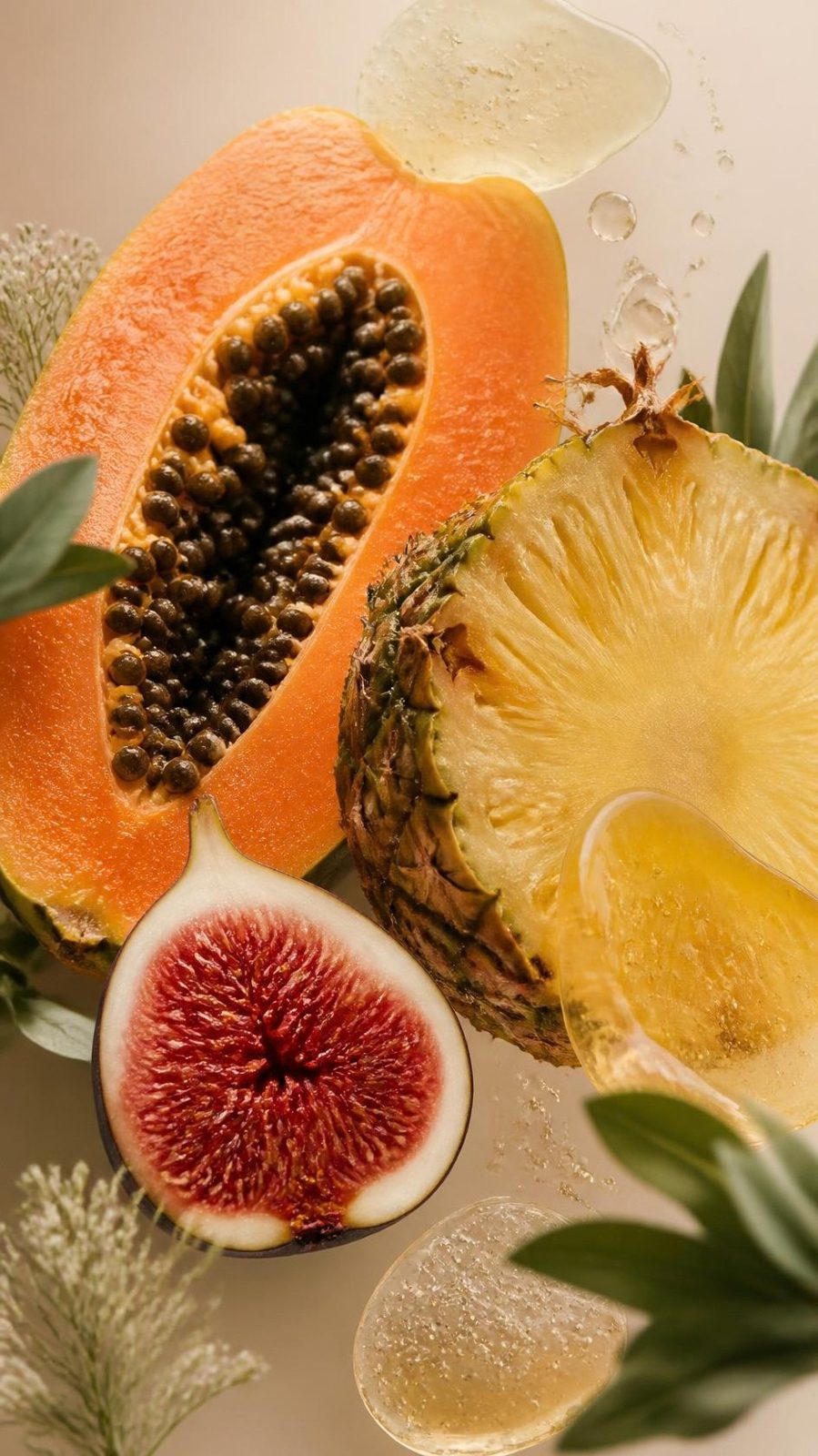
A proteolytic enzyme used for surface resurfacing, softening, and brightening.
A mixture of protein-digesting enzymes used to support smoothing and surface exfoliation.
Less familiar in the treatment room, but increasingly discussed in cosmetic research alongside papain and bromelain as a proteolytic exfoliating enzyme.
Pumpkin-derived extracts can contain proteolytic enzymes that support surface exfoliation. However, “pumpkin enzyme” is not one standardized enzyme, and its activity depends on the extract and formulation.
Read the INCI
If a pumpkin product feels dramatically stronger than your papaya enzyme, don’t assume pumpkin itself is simply a stronger enzyme. Look at the full formula.
EPC Take
The ingredient name is only the beginning. The finished formulation determines how the product behaves on skin.
04 · Enzymes
Enzyme innovation is moving beyond traditional fruit extracts toward biotechnology, improved stability, and more controlled exfoliation.
Researchers are developing microbial enzymes that break down keratin. Early laboratory findings suggest potential for more targeted exfoliation, although clinical evidence remains limited.
New encapsulation technologies aim to protect delicate enzymes from degradation, improve shelf stability, and maintain more consistent activity in finished formulas.
Emerging formulations combine papain and bromelain with acids like mandelic, using stabilization technology to preserve enzyme activity and support effective resurfacing.
EPC Watch List
The next breakthrough may not be a new enzyme, but a better formulation. Look for demonstrated enzyme activity, stability testing, and meaningful clinical results.

05 · Acids
An acid’s name and percentage don’t tell the whole story. Two peels with the same concentration can behave very differently on skin. Understanding why is key to choosing the right formula.
01
Tells you how much acid is in the formula, but not necessarily how aggressively it will exfoliate.
02
Measures how acidic a formula is. pH influences acid availability, penetration, and how the skin responds.
03
Every acid has a pKa. Together with the formula’s pH, it helps determine how much acid remains in its non-ionized (free acid) form, which generally penetrates skin more readily.
20% ≠ twice as strong as 10%.
Higher percentages don’t automatically mean stronger results. pH, buffering, delivery system, and contact time all influence performance and tolerability.
EPC Take
Don’t choose a peel by percentage alone. Understanding the chemistry behind the formula is what makes you a better practitioner.
06 · Acids
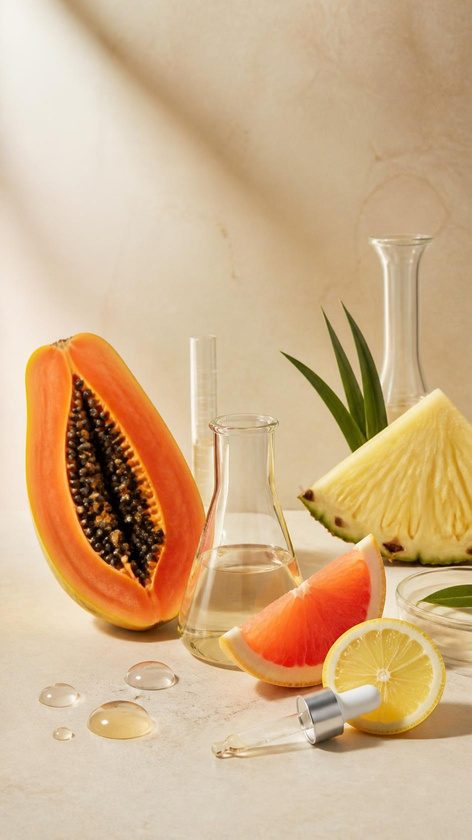
Small molecular size and efficient penetration. Commonly selected for texture, photoaging, and uneven pigmentation. Effective, but potentially less forgiving on reactive skin.
Exfoliating plus humectant properties make lactic useful when dryness or dehydration is part of the picture.
A larger molecule than glycolic with slower penetration. Popular in protocols targeting acne-prone skin, uneven pigmentation, and clients who may not tolerate more aggressive acids well.
Often found as supporting acids in blends. They may contribute exfoliating, antioxidant, or pH-adjusting roles depending on the formula.
An AHA derived from grapes, typically used in acid blends to support exfoliation and adjust pH rather than as a primary resurfacing agent.
07 · Acids
In skincare, salicylic acid is commonly classified as a beta hydroxy acid (BHA). Unlike water-soluble AHAs, salicylic acid is lipophilic, giving it an affinity for oily environments and making it especially useful for congestion, comedones, oily skin, and acne-prone skin.
A lipophilic derivative of salicylic acid. Research describes relatively slow penetration and targeted exfoliation within the stratum corneum, with comedolytic activity and good tolerability.
Larger molecular structures contribute to slower penetration. PHAs also have humectant and antioxidant properties, making them especially interesting for barrier-conscious exfoliation.
A non-exfoliating acid that targets excess pigmentation, particularly melasma and post-inflammatory hyperpigmentation. Often paired with AHAs in brightening protocols.
EPC Take
Exfoliants don’t all work the same. Understanding these differences helps you choose the right resurfacer for the client’s skin concerns and tolerance. Modern exfoliation is increasingly asking: How much can we accomplish while preserving the barrier?
08 · Acids
Gaining attention in blemish-focused and gentle resurfacing formulas. A 2026 study comparing 2% succinic acid with 2% salicylic acid found improvements in radiance and comedones, with less reported irritation in the succinic acid group. Promising, but larger clinical studies are needed.
New delivery systems aim to control how acids penetrate the skin. Emerging research on two-phase glycolic acid formulations suggests that smarter delivery may improve performance and tolerability without simply increasing acid strength.
Formulations combining PHAs, AHAs, and BHAs are gaining attention for balancing exfoliation with hydration and skin tolerance. The focus is shifting toward effective renewal without unnecessary irritation.
EPC Take
The next generation of resurfacing isn’t necessarily about stronger acids. Pay attention to how ingredients are delivered, combined, and tolerated. The finished formulation matters just as much as the featured acid.
09 · Acids
A September 2026 randomized study involving 124 women tested a serum combining gentle acids with bifida ferment lysate and proxylane. Results showed improvements in tone, texture, and hydration. An interesting direction for multifunctional resurfacing.
Researchers are examining how chemical peels influence the skin’s microbial ecosystem, not just surface cells. Early 2026 findings suggest peeling can alter microbial diversity, but what that means for long-term skin health remains unclear.
Newer research is tracking actual cell turnover, transepidermal water loss (TEWL), and microscopic skin changes rather than relying on visible peeling. More objective testing could help distinguish effective renewal from unnecessary irritation.
EPC Take
The next frontier is understanding what happens beyond the surface. Look for evidence of improved skin function, not just smoother skin. Innovation is exciting, but meaningful clinical results matter more.
10 · Judgment
“If it doesn’t tingle, it isn’t working.”
Sensation is not a reliable measure of efficacy. Visible peeling is not proof of a successful treatment either. The goal is an intentional response, not evidence that we irritated the skin.
Ask yourself
Is this skin asking for correction or recovery? If the barrier is impaired, another peel is never the fix. Sometimes the most corrective decision is to pause exfoliation and rebuild tolerance.
EPC Take
Great results come from knowing when to exfoliate, when to hold back, and how to build on each treatment.
Keep it handy
Consultation
The EPC bottom line
Great resurfacing starts with a thorough assessment, the right exfoliant, and knowing when to hold back. The goal isn’t the strongest peel or the most visible peeling. It’s measurable improvement over time without unnecessary irritation or barrier disruption.
The EPC Edit
Edition 1
Designing a treatment space that speaks to all five senses — sight, sound, smell, touch and taste — so the room itself becomes part of the treatment.
Edition 2
Seven tips for safely treating clients affected by cancer — contraindications, modifications, and how to communicate with confidence.
Every edition of The EPC Edit is free — practical, print-ready guidance for your treatment room.